Industrial History Online
Braithwaite's Yard
Key Words :- smokehouse
Address :- Yard 83 (Dr Manning's Yard), Highgate, Kendal, Cumbria
Grid Ref :- SD 51527 92477
Co-ordinates :- Lat 54.325552 , Long -2.746802
Local Authority :- Westmorland and Furness Council
Pre 1974 County :- Westmorland
Site Status :- Listed - Grade II
Historic England List No :- 1254290,
Description and History of Site:-
Kendal Civic Society plaque:
DR MANNING'S YARD
formerly
BRAITHWAITE YARD
In this house George Braithwaite, dyer, established a drysalter's business in 1713 supplying dyestuffs, alum, fuller's earth and other technical materials to the local textile trade.
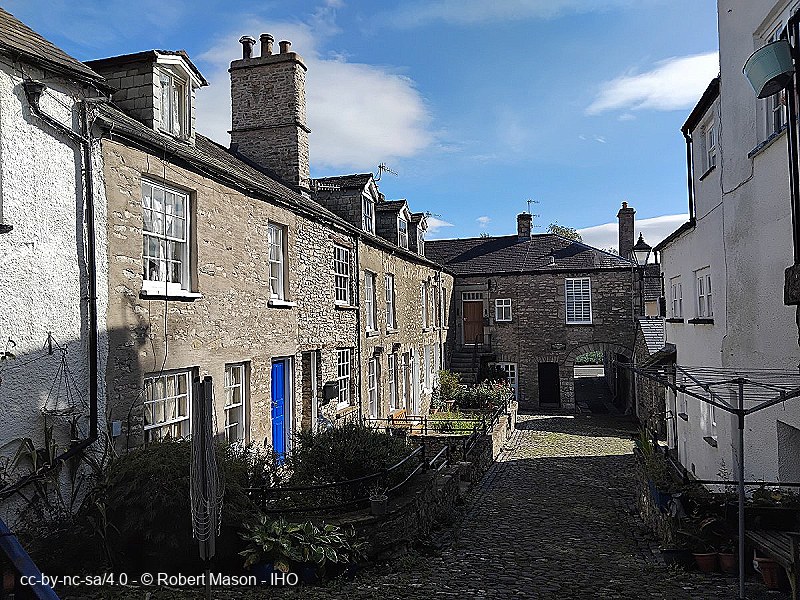
Down the yard were workers' cottages, the counting house or office over the archway, a ropewalk, a weaving shed and a dyehouse. The family were noted Quakers and philanthropists and set up soup kitchen in the 'Hungry Forties and a School of Industry for poor children. Dr Manning practised here for many years in the early 1900s.
Bennett (1993): 'One of the best preserved yards, formerly Braithwaite's Yard, now known as Dr Manning's Yard. It gives a good impression of cramped and enclosed 19th-century housing conditions. The ropeworks, dyeworks, tannery and bark mill once to be found here have all gone but were typical of the range of small industrial premises located in these yards.'
Further Reading and References:-
Bennett, John and Jan. 'A Guide to the Industrial Archaeology of Cumbria'. Association for Industrial Archaeology, 1993
Help us improve this entry
Grid Ref :- SD 51527 92477
Co-ordinates :- Lat 54.325552 , Long -2.746802
Local Authority :- Westmorland and Furness Council
Pre 1974 County :- Westmorland
Site Status :- Listed - Grade II
Historic England List No :- 1254290,
Kendal Civic Society plaque:
DR MANNING'S YARD
formerly
BRAITHWAITE YARD
In this house George Braithwaite, dyer, established a drysalter's business in 1713 supplying dyestuffs, alum, fuller's earth and other technical materials to the local textile trade.
Down the yard were workers' cottages, the counting house or office over the archway, a ropewalk, a weaving shed and a dyehouse. The family were noted Quakers and philanthropists and set up soup kitchen in the 'Hungry Forties and a School of Industry for poor children. Dr Manning practised here for many years in the early 1900s.
Bennett (1993): 'One of the best preserved yards, formerly Braithwaite's Yard, now known as Dr Manning's Yard. It gives a good impression of cramped and enclosed 19th-century housing conditions. The ropeworks, dyeworks, tannery and bark mill once to be found here have all gone but were typical of the range of small industrial premises located in these yards.'
Bennett, John and Jan. 'A Guide to the Industrial Archaeology of Cumbria'. Association for Industrial Archaeology, 1993
The compilers welcome corrections or additional information on all sites.
Any information provided will be verified before appearing on the web site.
Email comments
Contributor :- Robert Mason - 28 October 2024
Copyright :- cc-by-nc-sa 4.0 © Robert Mason
Copyright :- cc-by-nc-sa 4.0 © Robert Mason