Industrial History Online
Ridsdale Ironworks
Key Words :- coke fired blast furnaces ironworking
Address :- A68, Ridsdale, Northumberland
Grid Ref :- NY 90900 84647
Co-ordinates :- Lat 55.156069 , Long -2.144348
Local Authority :- Northumberland County Council
Pre 1974 County :- Northumberland
Site Status :- Scheduled Ancient Monument SAM
Historic England List No :- 1006420, 1304070,
Site Condition :- Site derelict - some buildings remaining
Site Dates :- 1836 - 1839
Description and History of Site :-
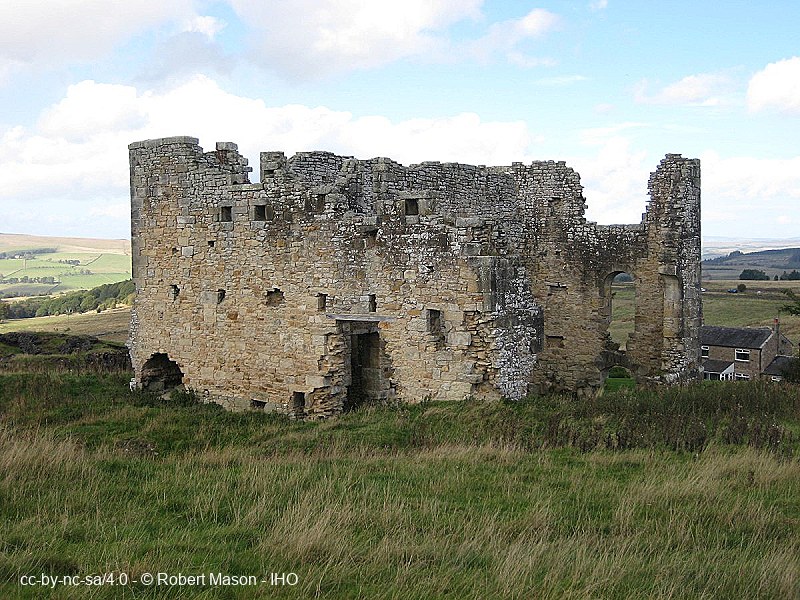
The shell of an engine house formerly containing two beam blowing engines is the main surviving feature of the substantial but short-lived Ridsdale Ironworks (circa 1838 to 1868). Coke ovens, tramways and furnace yard are also still discernible. Recommended as Schedule. Furnace house at Ridsdale Iron Works. Grade II. Furnace house. Early C19. Random rubble with ashlar quoins and Welsh slate roof. One tall storey. 3 bays long. Double doors in later gabled ashlar porch on gable end. 3 tall 12-pane windows on each long side and, on left side square lateral chimney stacks with cornices and dripstones. Gabled roof. Within the boundary of Scheduled Ancient Monument. Adjacent similar building altered and not now of special interest.
Information panel 1:
RIDSDALE IRONWORKS: CASTLE OF INDUSTRY
You might assume that this impressive stone building was a castle. But inside these walls thundered two enormous steam-powered beam engines, built in 1836.
The engines powered blowers that kept the fires of three blast furnaces roaring. The people who worked here lived in the new village of Ridsdale, built by the ironworks' founders.
Ridsdale Ironworks rarely turned a profit. By 1864, William Armstrong - the last owner - had moved the valuable steam engines to his works in Newcastle. Can you spot the walls he took down to get them out?
Today, this ruin survives as a rare witness to a brief period of heavy industry in Redesdale. The structure is a Scheduled Monument and Grade II listed building and was conserved in 2019 by the Revitalising Redesdale Landscape Partnership.
You are standing across the road from the reservoir. The blast furnaces survive today as part of the buildings downhill from the engine house. You can still trace the lines of the coking ovens in the field, the old waggonway and the reservoir across the road which served the ironworks. As you drive around Redesdale, look for other clues to the past. The landscape hides the remains of Roman forts, medieval farmsteads and long-gone industry.
Information panel 2:
The village of Ridsdale was built to house the workers at an Iron Foundry. The area had abundant mineral resources and landowners and entrepreneurs sought to exploit them commercially in the 19th century. In 1838 the lease on mineral rights was taken out by the Chesterhope Iron Company. Stephen Reed, a local landowner and Thomas Hedley, another local man, were two of the proprietors. The company set up the foundry and built the village of Ridsdale for the workers.
In 1839 the Derwent Iron Works bought the works and village for £30,000. They erected two more blast furnaces, enlarged the village and increased production. The company continued operations and prospered. In 1846, when Robert Stephenson was commissioned to build the High Level Bridge over the Tyne in Newcastle, fifteen varieties of hot and cold blast iron were tested and Ridsdale iron was found to be the strongest. Stephenson purchased large quantities and used it in the construction of the bridge. However by 1847 the company was in difficulties and despite some further investment all founding was abandoned.
In 1852 a Mr Foster bought the works but was unable to raise enough to re-open. Finally in 1862 W.G. Armstrong bought the village and works for the very small sum of £3,500. He obtained the mineral rights of the Ridsdale area from the Duke of Northumberland and by 1864 the Foundry was in operation again. When the Border Counties Railway was opened Armstrong obtained a spur line from Redesmouth which was used to transport iron ore from Broomhope to his smelting works in Elswick as ore was no longer being smelted in Ridsdale. The iron ore from Ridsdale was of high quality and particularly suitable for armour piercing projectiles.
Iron ore operations in Ridsdale continued until 1879. Armstrong then took over the gun testing range at the Steel. The village was used to house his workers until 1929 when the properties were sold off. Local businessmen then took over the local pits, thus keeping a working community in Ridsdale.
Atkinson (1974): 'Standing near the A68, is a great stone building looking rather like the keep of a border castle. It is, however, the derelict engine house of the Ridsdale Ironworks which were founded in the 1830s and worked only for some twenty years. Much of the removable machinery was later transferred to Armstrong's Elswick works. Near the engine house is a depression marking a blast-furnace site and a few yards farther to the south are the rough foundations of a double bank of beehive ovens.'
Falconer (1980): 'Established c 1836, this ironworks only operated into the 1860s and has thus left in plan the layout of a small mid-19th-century ironworks unadulterated by later developments. The engine house, built to contain two beam blowing engines, is the most substantial relic but traces of coke ovens, the furnace yard and the servicing tramway can also be discerned.'
Further Reading and References :-
Atkinson, Frank. 'The Industrial Archaeology of North-East England'. David & Charles, 1974
Falconer, Keith. 'Guide to England's Industrial Heritage'. Batsford, 1980
https://www.heritagegateway.org.uk/Gateway/Results_Single.aspx?uid=33d5379b-3147-4baa-931b-7759bf58a662&resourceID=19191
Help us improve this entry
Grid Ref :- NY 90900 84647
Co-ordinates :- Lat 55.156069 , Long -2.144348
Local Authority :- Northumberland County Council
Pre 1974 County :- Northumberland
Site Status :- Scheduled Ancient Monument SAM
Historic England List No :- 1006420, 1304070,
Site Condition :- Site derelict - some buildings remaining
Site Dates :- 1836 - 1839
The shell of an engine house formerly containing two beam blowing engines is the main surviving feature of the substantial but short-lived Ridsdale Ironworks (circa 1838 to 1868). Coke ovens, tramways and furnace yard are also still discernible. Recommended as Schedule. Furnace house at Ridsdale Iron Works. Grade II. Furnace house. Early C19. Random rubble with ashlar quoins and Welsh slate roof. One tall storey. 3 bays long. Double doors in later gabled ashlar porch on gable end. 3 tall 12-pane windows on each long side and, on left side square lateral chimney stacks with cornices and dripstones. Gabled roof. Within the boundary of Scheduled Ancient Monument. Adjacent similar building altered and not now of special interest.
Information panel 1:
RIDSDALE IRONWORKS: CASTLE OF INDUSTRY
You might assume that this impressive stone building was a castle. But inside these walls thundered two enormous steam-powered beam engines, built in 1836.
The engines powered blowers that kept the fires of three blast furnaces roaring. The people who worked here lived in the new village of Ridsdale, built by the ironworks' founders.
Ridsdale Ironworks rarely turned a profit. By 1864, William Armstrong - the last owner - had moved the valuable steam engines to his works in Newcastle. Can you spot the walls he took down to get them out?
Today, this ruin survives as a rare witness to a brief period of heavy industry in Redesdale. The structure is a Scheduled Monument and Grade II listed building and was conserved in 2019 by the Revitalising Redesdale Landscape Partnership.
You are standing across the road from the reservoir. The blast furnaces survive today as part of the buildings downhill from the engine house. You can still trace the lines of the coking ovens in the field, the old waggonway and the reservoir across the road which served the ironworks. As you drive around Redesdale, look for other clues to the past. The landscape hides the remains of Roman forts, medieval farmsteads and long-gone industry.
Information panel 2:
The village of Ridsdale was built to house the workers at an Iron Foundry. The area had abundant mineral resources and landowners and entrepreneurs sought to exploit them commercially in the 19th century. In 1838 the lease on mineral rights was taken out by the Chesterhope Iron Company. Stephen Reed, a local landowner and Thomas Hedley, another local man, were two of the proprietors. The company set up the foundry and built the village of Ridsdale for the workers.
In 1839 the Derwent Iron Works bought the works and village for £30,000. They erected two more blast furnaces, enlarged the village and increased production. The company continued operations and prospered. In 1846, when Robert Stephenson was commissioned to build the High Level Bridge over the Tyne in Newcastle, fifteen varieties of hot and cold blast iron were tested and Ridsdale iron was found to be the strongest. Stephenson purchased large quantities and used it in the construction of the bridge. However by 1847 the company was in difficulties and despite some further investment all founding was abandoned.
In 1852 a Mr Foster bought the works but was unable to raise enough to re-open. Finally in 1862 W.G. Armstrong bought the village and works for the very small sum of £3,500. He obtained the mineral rights of the Ridsdale area from the Duke of Northumberland and by 1864 the Foundry was in operation again. When the Border Counties Railway was opened Armstrong obtained a spur line from Redesmouth which was used to transport iron ore from Broomhope to his smelting works in Elswick as ore was no longer being smelted in Ridsdale. The iron ore from Ridsdale was of high quality and particularly suitable for armour piercing projectiles.
Iron ore operations in Ridsdale continued until 1879. Armstrong then took over the gun testing range at the Steel. The village was used to house his workers until 1929 when the properties were sold off. Local businessmen then took over the local pits, thus keeping a working community in Ridsdale.
Atkinson (1974): 'Standing near the A68, is a great stone building looking rather like the keep of a border castle. It is, however, the derelict engine house of the Ridsdale Ironworks which were founded in the 1830s and worked only for some twenty years. Much of the removable machinery was later transferred to Armstrong's Elswick works. Near the engine house is a depression marking a blast-furnace site and a few yards farther to the south are the rough foundations of a double bank of beehive ovens.'
Falconer (1980): 'Established c 1836, this ironworks only operated into the 1860s and has thus left in plan the layout of a small mid-19th-century ironworks unadulterated by later developments. The engine house, built to contain two beam blowing engines, is the most substantial relic but traces of coke ovens, the furnace yard and the servicing tramway can also be discerned.'
Atkinson, Frank. 'The Industrial Archaeology of North-East England'. David & Charles, 1974
Falconer, Keith. 'Guide to England's Industrial Heritage'. Batsford, 1980
https://www.heritagegateway.org.uk/Gateway/Results_Single.aspx?uid=33d5379b-3147-4baa-931b-7759bf58a662&resourceID=19191
The compilers welcome corrections or additional information on all sites.
Any information provided will be verified before appearing on the web site.
Email comments
Contributor :- John Suter - 6 April 2024
Copyright :- cc-by-nc-sa 4.0 © John Suter
Copyright :- cc-by-nc-sa 4.0 © John Suter